CD8180 / CD8160 / P1#
General Specifications#
Specs
| SoC | CD8180 / P1 |
|---|---|
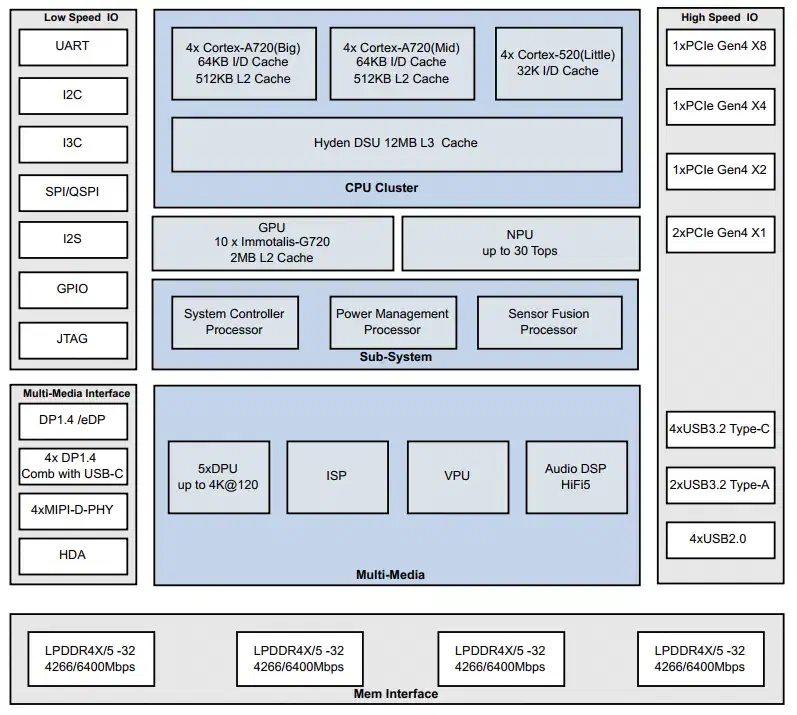
| CPU | 4x Cortex®-A720 (Big cores) up to 2.8GHz 4x Cortex®‑A720 (Medium cores) up to 2.4GHz 4x Cortex®‑A520 (LITTLE cores) 1.8GHz |
| RAM | LPDDR5 RAM - 128bit memory bus - 5500MT/s transfer speed - Configurations: 4GB / 8GB / 16GB / 32GB / 64GB |
| GPU | Arm® Immortalis™ G720 MC10 - Hardware Ray‑Tracing enabled - Vulkan® 1.3 - OpenGL® ES 3.2 - OpenCL® 3.0 |
| VPU | Arm-China Linlon V8 - 8K@60fps decoder AV1, H.265, H.264, VP9, VP8, H.263, MPEG‑4, MPEG‑2 - 8K@30fps encoder H.265, H.264, VP9, VP8 |
| NPU | Arm-China Zhouyi - Computing Power: 30 TOPs - Precision Support: INT4 / INT8 / INT16 / FP16 / TF32 |
Every Cix P1 has been limited up to 2.6GHz afterwards while the original target was 2.8GHz
Block Diagram
Linux Support#
Mainline kernel#
- Fully supported.
- Works but not all features are implemented.
- Driver support status available here
Available OS#
- Ubuntu Concept
- Vendor Releases (see board page)
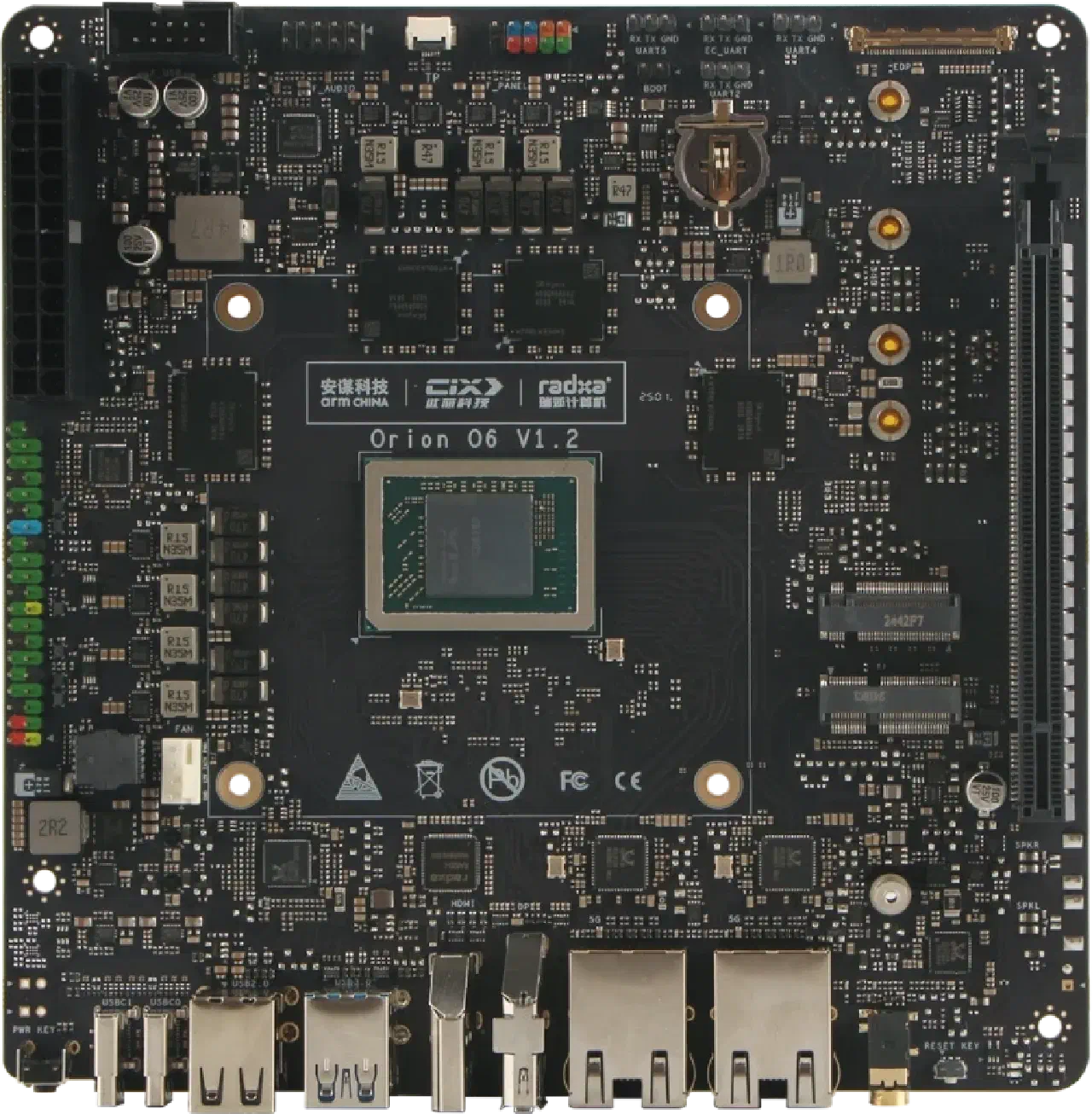
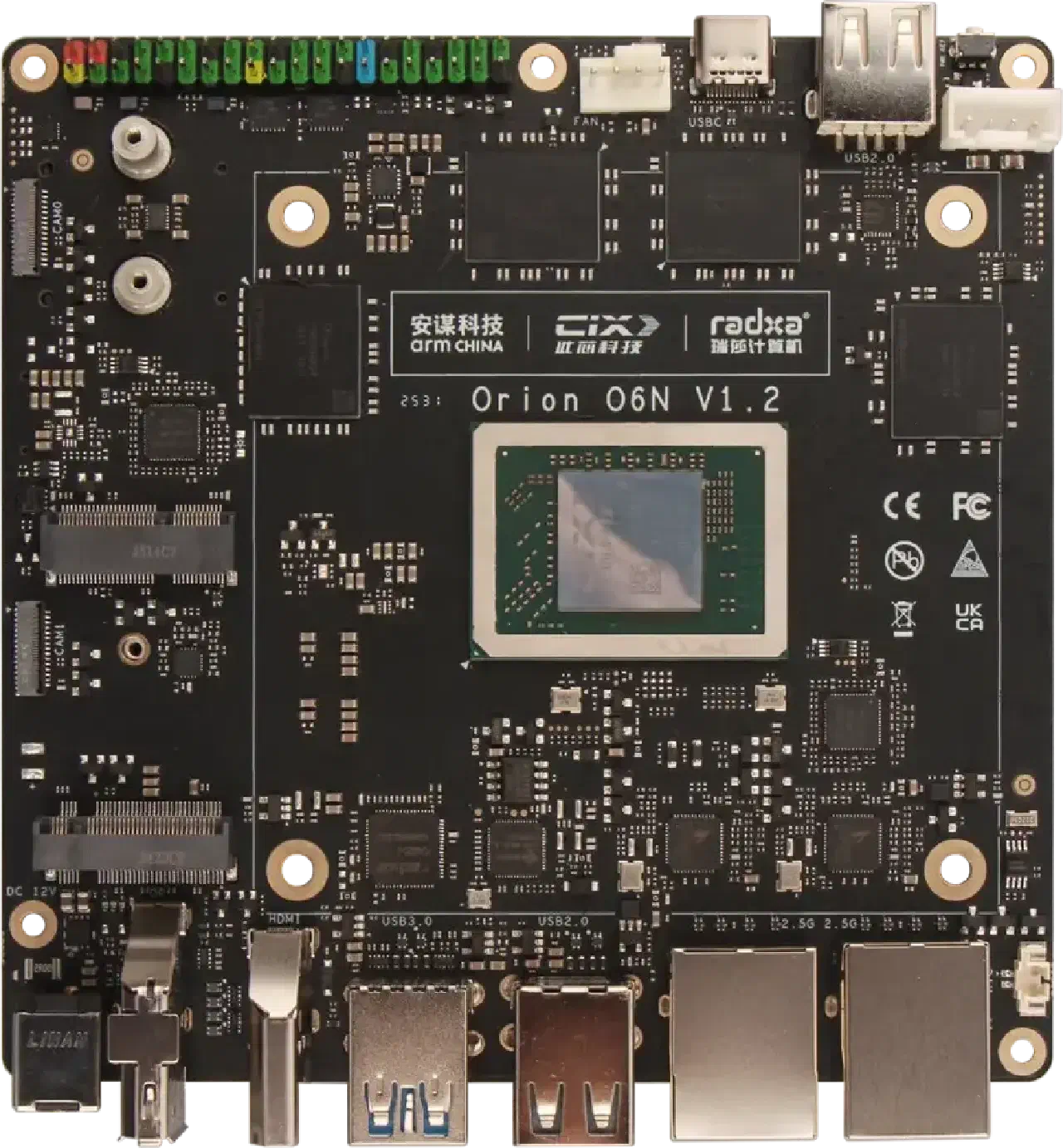
Boards with Cix P1#
List of boards:
- Minisforum MS-R1
- Radxa Orion O6N
- OrangePi 6 Plus
- MetaComputing ARM AI PC
What variant is CD8160?#
“CD8160 was the silkscreen used in early mass production. As PC/server models entered production, all silkscreen numbers were standardized to C*8180. CD8160 is no longer supplied.”
Cix P1 variants like CD8160 are all the same SoC from different batches in production. There are no differences.